Sunday, June 24, 2012

Sweedish Study Causes Mayhem!

Recently a study was published in Sweden that has caused quite a stir in the nutrition-minded community.

Hell yeah Sweden

Since 2004, the Swedish have experienced a rise in the popularity in low carb, high fat diets.  The study that came out was a 25 year observational study that considered the diet of 140,000 Swedish people based on self reported surveys on what they ate, their body weight, and serum cholesterol. They conducted the study as a result of Sweden having the highest rate of heart disease of any country in the 1970s. In1985, the country introduced its intervention campaign. The study was designed to observe lifestyle and diet, and make connections to heart disease in an effort to help Sweden overcome it's high rate of heart disease.

To the bewilderment of the lower-carb minded community, the study seemed to show that when people cut their carb intake and replaced it with fat, over time their cholesterol levels went up, as well as their BMIs and therefore, risk for heart attack. As a result, there were a flurry of commentaries and articles such as Atkins diet found to be bad for the heart and this sassy article: Time to Retire the Low Carb Diet Fad. The study also noted that over the course of the 25 year study, BMI steadily increased along with alcohol consumption (something that I felt worth noting, but the articles above did not).

Another interesting point was that towards the beginning of the study the Swedish were leaning more towards a low fat high carb diet and then as low carb diets grew in popularity, they switched gears. However, the BMIs of the population studied went up (not exactly steadily, but up nonetheless) regardless of diet breakdown.

It's probably just because of the Swedish chef....

The study does not look at HDL vs LDL cholesterol, triglycerides, or even if the high levels of cholesterol observed in the study even led to heart disease. Current research suggests that total cholesterol alone is a pretty scant indicator of future heart disease, and the breakdowns and ratio's of these numbers are far more important. This population of Swedes could be enjoying great health with high levels of HDL and low numbers of the small sticky LDL, but we just don't know either way. There are no mortality statistics in the entire report, which is odd considering that the whole reason people fear heart disease is that essentially, it can kill you. The study even notes : “our study design does not allow a causal evaluation of the relationship between the increased fat intake since 2004 and the increased cholesterol values after 2007.”

So the question we must ask ourselves is: Why does the media see fit to alert the public to the dangers of a diet, when the diet itself was not extensively studied and a causal relationship was not established between a high fat diet and cholesterol? A commentary on the blog MarksDailyApple wisely even observed: "there was a four-to-six-year lag between the rise in fat consumption and the 2008 cholesterol jump – implying that Sweden’s fat-feasting took half a decade to affect blood values." The conclusion that the low carb craze that took over Sweden being the singular culprit for high cholesterol levels seems pretty sketchy to me.

I think that the main take away from all of this is that people need to be far more skeptical of what the mouthpieces in the media are touting. As we are all painfully aware, loud eye catching headlines are far more lucrative than "Study Shows That Cholesterol in Swedes Went Up--- We Don't Really Know Why." Before anyone decides to undertake a life changing diet plan, they need to do their own research and decide what is best and what is going to work for them. Unfortunately, the American public has gotten quite comfortable listening to the contradictory advice of the government and health guru media icons who seem to have a new mind blowing cure for metabolic diseases every few weeks. The best advice anyone can give is be skeptical, and be proactive towards your health goals, rather than letting others make choices for you.


Sources:
http://www.marksdailyapple.com/is-it-time-to-retire-the-low-carb-diet-fad/#axzz1y9rF7flV
http://www.dietdoctor.com/the-swedish-low-carb-revolution

Monday, May 28, 2012

Home Made Mayo and Gluten Free Crab Cakes!

     It's always fun (for some of us) to cook big fancy dinners where you put a lot of thought and care into planning out a menu and shopping for ingredients. But where people really need help is cooking simple week night meals that satisfy and don't resort to compromising your health goals. Also not breaking the bank is an important requirement.

One helpful book that I picked up semi recently was Paelo Comfort Foods by  Julie and Charles Mayfield.


There are a lot of great recipes in here that make it possible for people to still eat their favorite foods (biscuits, bread, muffins, fried chicken.....) while not only staying gluten free but also keeping all other nasty ingredients out of the kitchen. The problem with a lot of gluten free products is that they are still highly processed and contain a lot of sugar, but this cookbook contains only clean foods that wont set you back.

One of the recipes I put to good use is their recipe for home made mayo. The problem I was having was that I could not find a mayo that was free of seed oil. All of them (even the "natural" or "organic" brands were based with canola or safflower oil. As I have said in previous posts, these oils are often pretty much rancid and will wreak havoc on your cells if we consume too much of them. The idea of making my own was daunting, until I realized how easy it is! All it really is is blending an egg with oil very slowly and adding some salt pepper, mustard and whatever else you want. It takes about five minutes.

A good oil to use is avocado oil because it is a very safe, healthy fat. It also has a very mild flavor. However, it isn't cheap, so the recipe calls for 1/2 cup avocado oil and 1/2 cup olive oil. I don't mind the olive oil flavor in mayo, but if you don't like it you can use all avocado oil. I don't want to give away the recipe in the book, but here is another good one from Nom Nom Paleo. I have seen a bunch of recipes (they are all more or less the same) but some of them say to only use the egg yolk and some say use the whole egg. I use the whole egg because it is easy and comes out great! So why waste the white?


And there it is. So easy. I think sometimes we get so used to convenience foods that we forget how easy it can be to make stuff ourselves. So try to make your own mayo, it's tastes a lot better too and keeps for about 2 weeks!

So after I made the mayo, I wanted to make something quick and easy. I remembered I had bought crab meat from Trader Joe's, so I looked in my Paleo Comfort foods book and saw that they had a recipe for crab cakes. I actually didn't have all the ingredients, so here is MY version of the crab cakes in the book

You will need:
around 1 lb crab meat (I had a little more)

1/4 cup Mayo
1 egg
Worcestershire sauce
Chives or Scallions
Bell Pepper
Parsley
1/4 cup Almond flour 
1/3 cup Almond flour (separately)


400 degree oven


First I took 3 cans of 6 oz of crab meat. You don't have to get the super expensive stuff, the 15% leg meat is fine (it's only crab cakes...) Drain it and put it in a bowl to the side. Make sure you drain it really well, I think I would have gotten even better results if I paid more attention to this step.


Then I chopped about 1/2 a red pepper, a bunch of chives, and a bunch of parsley and set it aside. Then, in a separate bowl I whisked together 1/4 cup of mayo, 1 whole egg, some Worcestershire sauce, and some salt and pepper.  Then pour the mixture over the crab, and gently using your hands add in the chopped ingredients. Blend in 1/4 cup of almond flour as a binder. Then, use your hands to press the crab cakes into little patties, and dredge them in the 1/3 cup of almond flour, then put on a greased cookie sheet. Pop them in the oven and 15-20 minutes later you have yourself a tray full of crab cakes!


Simultaneously, I was able to chop up some other veggies with some bacon, and roast them in the oven at the same time. Couldn't be simpler. 

Also, if you want more of a well documented recipe, here is another one from Nom Nom Paleo. Enjoy!

Monday, May 21, 2012

Why I Am Gluten Free: The Short Version


So gluten free options are all over supermarkets and are gaining popularity in the media in general. But there still seems to be a lot of resentment and misunderstanding around he whole idea of not eating gluten grains (there are several gluten grains, but the main one that people eat is obviously wheat). Honestly, I can understand why. Good bread is fluffy, wonderful, comforting, and really addictive.  
I wish bread made ME this cute
  As it turns out, bread actually IS addictive and according to Dr. William Davis of Wheat Bellies. It has an opiate- like effect on the brain, targeting both your opiate receptors (the same receptors that react to pain killers and heroin) as well as creating strong surges of dopamine in your brain, another feel good chemical that leaves you craving more. 

Another fun thing that gluten does, is create a chronic condition called leaky gut syndrome. The wheat germ of a gluten grain contains a protein called lectins. Many grains and legumes contain lectins, which is why people following a paleo diet avoid them. However, gluten grains have the most persistant and ugly lectans around. 

The Germ is where the lectans are contained. Ironically, isolated wheat germ is sold as a health food
Plants contain these lectans as a defense mechanism against animals who want to eat them. It is poisonous to small animals. Although it is not fatal, it is poisonous to us too. When we eat wheat, the lectan is able to disguise itself as any other protein and bind itself to our tissues. Eventually, our bodies figure out that the lectan is hurting us and creates an inflammatory response in an effort to save our cells. This constant inflammation is stressful to our bodies, and can lead to diabetes, heart disease, and even cancer. If we eat lecan conaining grains often enough, they bind to our stomachs and break down our gut lining, literally causing small holes in our gut (hence the term leaky gut syndrome). 

Essentially, this leaky gut allows gluten, and any other food you eat, to enter the blood stream. Your body, knowing it doesn't belong there, attacks it. This again creates an inflammatory condition that can literally effect any organ in your body. This is why there is such a HUGE range of symptoms including Alzheimer's, auto immune diseases like Rheumatoid Arthritis, Osteoporosis, and even Autism! Often many times people who are really just allergic to gluten take tests that show they are allergic to many many foods. This is because when you have leaky gut, your body will attack anything you eat, making it hard for you to absorb nutrients, and leading to other ranges of problems.

In my case, my thyroid has been acting funny and since my blood work is pretty darn near perfect, no one really knows why. So for me, I hope that eliminating gluten will help me with my thyroid as well as prevent me from developing conditions in the future. Not to mention the fact that when you avoid gluten, you also happen to be avoiding a lot of carby foods that will make you fat.

The good news is that the human body is amazing and many people can heal themselves with diet alone. If you are kind to your body for long enough, cutting out the gluten grains can improve your life and be part of your long term health plan.

So I think that everyone should give it a try for at least a few weeks and see if they feel better. I know it can be hard if you are used to eating it all the time. But for a lot of people it is totally life changing.

Here is an example of an easy weeknight gluten free meal. It's basically just good easy wholesome food:


I'm not really even sure what I did with these chicken thighs. I caramelized some onions in coconut oil, chopped it up stir fry style,  and let it cook with Bragg Liquid Aminos (gluten free soy sauce), Worcestershire sauce, and then let some shiitake mushrooms and greens from my garden wilt in.

I also roasted some sweet potato and put it all on a big bed of greens. Easy, delicious, and perfectly grain free. 

Enjoy!


Sunday, May 20, 2012

Oh How Time Flies!

Hello All!

I know I have not blogged in forever, but I am newly inspired to start again. Part of the reason I stopped was because I just didn't feel like I had the time....

We all feel like this sometimes

  I also just felt like there were so many other awesome food blogs out there that I really didn't need my voice to be heard. But I updated my blog list to what I am keeping up with now, and I feel like maybe there IS room and demand for my blog too (even if it is mostly from my mom)

Mom!

Since I last updated, I have definitely undergone some changes to my diet and lifestyle, all of which have been really positive. Since December 1st (when I had a consultation with Nutritional Weight and Wellness) I have been completely gluten free. I didn't have any hugely dramatic changes like you sometimes hear about, but I definitely have more energy and feel better. I have a slight abnormality in my thyroid, so I think that it is also helping me with that internally. If you want to read more about being gluten free and the many many reasons to cut it out of your diet, I highly reccomend the book Wheat Bellies by Dr. William Davis, which I will hopefully post more about later.


As of recently, I am also almost totally dairy free with a few exceptions, and that is also really benefiting my over all health (and I suspect weight loss). Although I haven't lost too much weight in lbs, I have been working out and look a lot less puffy than I used to, probably due to all of the anti- inflammatory foods I eat and the inflammatory foods like gluten and dairy I avoid. In general I try to stick to a primal way of eating (as you can see from my updated blog roll) and try to stick as closely as I can to what humans are really supposed to be eating

I basically feel like I do have a lot to share with my take on nutrition and what I eat, and I want to impact anyone who reads this with positive advice as well as my take on nutrition and health news. Although there are SO many great resources out there for nutrition advice and commentary, there is also such a sad epidemic of overweight and sick people. Even if you suffer from something as simple as low energy or occasional stomach aches, there are nutritional changes you can make to help. There is obviously a greater need for more soundpieces to be putting out the right message. So hopefullly I can get my act together to share everything I read and do with you!


So more to come!

Sunday, April 3, 2011

Sorry for the Delay! and Taxes on Soda...

The sultry soda temptress
I have been terrible! It has been so long since my last post and I think that I will probabaly be a little bit till my next one too since I have been so consumed with school. However, I am still trying my best to follow the food news and put my 2 cents in.

One item of news that has been bobbing around for the past few years is a soda tax. I found a great article by Appetite for Profit on the soda tax and how it's mere suggestion has revealed the ugly side of USDA politics. Since Dr.s at the Philadelphia Childrens Hospital spoke out against Soda's negative impact on the obesity rate in America, the American Beverage Association has donated 10 million to the hospital in order to combat obesity. They also want to quell any talks about putting a tax on soda, which would meddle in their competitively low prices. As a result the mayor of Philadelphia is no longer considering the tax for this year.

I remember a few years ago when they were debating this issue in my area, there were commercials on TV with a mother putting away her groceries, complaining about how it's hard enough for her to feed her family without government meddling with her pocketbook.

The thing is, if you are having trouble making ends meet, why are you buying soda at all? There is a great drink that is available to all of us for almost nothing: WATER!

Look how cute water can be!
 Not to mention that all of the health problems caused by drinking too much soda (which drive everyone's health costs up), as well as the damage to the environment caused by the harsh processing practices, use of GMOs in ingredients, and un-recycled containers. These are things that the beverage industry is getting a free pass for. Maybe we should be taxing the beverage company too, but either way buying less soda and making it more expensive to poison yourself isn't a bad idea. This whole issue, as brought up in the article, is very similar to what happened to Big Tobacco. Both industries are trying to sell is things that we really do not need at all, and are actually bad for our health. And both need to convince the consumer that anything making it harder for them to buy their product so often is simply an attack on freedom.

Although I don't think that government should be messing with people's lives, I think of this proposed tax as more of a protection. Big business has ALREADY attacked and hooked many Americans on their products. Anything the government does to try to curb this would be an act of defense against big beverage companies rather than an offensive stripping of our freedom. Honestly, a few cents on every ounce of soda is not going to really make a big dent in obesity and metabolic syndrome. However, it can start to give a stigma to soda that eventually worked on the tobacco industry and the money collected can be used to promote health and wellness in America.

I would love to hear what some of you think about this, even if you disagree with me. Is there something I am missing? This seems like a no-brainer.

Tuesday, February 22, 2011

Current Events: GMOs like woah.

So Micheal Pollan was on WYNC yesterday talking about GMOs (genetically modified organisms) and explaining the government's position on allowing GMOs without labeling. It's pretty scary stuff actually. Monsanto and other big agribusiness companies develop GMOs, mostly soy and corn, to be more resistant to pesticides, leading to MORE pesticides in the food system. Although most of the GMO corn and soy is fed as livestock feed, they may ave negative impacts on the animals which get passed down. In addition, any non organic food that you eat with corn or soy as an ingredient is most likely GMO. Now we have the addition of alfalfa, sugar beets, and perhaps the introduction of a new freaky fast-growing salmon to be raised on farms. This has not yet been approved in Washington, but it is well on it's way.

Old way to eat salmon

New way to eat salmon!
There are a huge amount of problems with eating farm raised-salmon in the first place (a post for a different day) but adding a GMO factor to the awful mix does not seem like a good idea to me.

The only real requirement to having a GMO enter the market (as a new form of alfalfa, sugar beets just entered the market) is that the foods have to just be "not harmful" to the environment. This is sort of subjective because they only look at the crops on their own, not the new amounts of chemicals that get applied or the fact that it contaminates organic crops and other non GMO crops through cross pollination. Also, they are looking at very obvious short term impacts, no one knows how GMOs will effect us or the environment in the long term. The way that we farm industrially is already pretty awful for the environment, so I guess "not harmful" to the government really just means "no worse than it already is." Go figure.

Amber waves of genetically modified corn commodities


Unfortunately, both republicans and democrats are pretty friendly with these big GMO companies. This is not surprising because Monsanto is so scary. One of the most memorable parts of the documentary Food Inc. was the defeated, deflated, and scared appearances of the farmers who had upset Monsanto in some way. They are just huge companies with tons of money behind them and can easily ruin your life if you cross them. These are the people who are lobbying in Washington for GMO foods to not have to be labeled in the food supply. Even if they are not harmful, shouldn't we have the choice to not eat GMO food? It seems like an obvious thing, however, the companies argue that labeling them would cause confusion and undue fear in people. That is pretty funny since food companies seem to use confusion to their advantage when it comes to nutrition data and ingredient lists (If you are a dedicated shopper, you might spend hours in a grocery store trying reading labels trying to figure out anything you might want to buy outside the produce isle). Right now, the only way you would have the choice to not eat GMOs is to only eat organic. Not that bad of an option in general, but it's still messed up. However, this really mostly applies to processed food, since there is really no produce right now that is being genetically modified (yet). Also, Pollan pointed out that when Obama ran for president, he said that he supported the labeling of GMO products. However, now he seems to be okay with not labeling them.

Anyway, I guess this is just another reason to eat organic produce, and watch out for those farm raised salmon!

Wednesday, February 9, 2011

Sorry, you are all just wrong!


Recently food author Marc Bittman has started his opinion column in the New York Times titled A Food Manifesto for the Future. I read it last week and thought that it was pretty good. Admitedly it was somewhat unrealistic and even Bittman admitted via twitter that there were giant holes in some of the things he was saying. However, the American political food set up is SO complicated, a real description of the exact steps the American government should take to fix the food system would fill several sets of encyclopedias (if you are interested in this topic, a good place to start is Nestle's Food Politics).


Anyway, as expected one of the major industry representatives took issue with what Bittman said about what needs to happen in regards to the way that meat is produced in this country (basically that it needs to be made more sustainable, humane, and safe). In this case, it was The National Pork Producers Council who wrote a letter to the editor saying that "Modern livestock housing is temperature-controlled, well lighted and well ventilated. It keeps animals safe and comfortable and protects them from predators and disease. That's why the incidence of key food-borne illnesses in this country is going down, not up." Whatever. Everything that I have read tells me that this is a big fat lie. However, this was not what really got my blood boiling. I fully expect the huge industries in this country to try to defend themselves when they are attacked by people who can influence consumer's decisions in the supermarket. What really got my attention was a comment on the article about the letter.....

the comment read:

The pork producers shouldn't get so peeved at Bittman, they're taking him much too seriously.
Obviously Bittman's just blowing smoke up all of our skirts. That, or he's a stunning hypocrite...just have a look at how his 'healthy' recipes stack up:
http://www.consumerfreedom.com/news_detail.cfm/h/4377-test
No wonder the Times moved him to the opinion section.

When you click the link, it is the center for consumer freedom (who I have read ridiculous articles from in the past) trying to claim that because STOUFFER'S meals have less calories than some of Bittman's recipes, they are BETTER for you than his home cooked meals. This was the craziest quote from the article: "On almost every count, the microwavable meals are healthier than Bittman's homemade fare. And they often contain substantially fewer calories and fat grams."

This article represents pretty much everything that is wrong with America's perception of food and how we value foods. Here is why in my humble opinion....

1) If you look at Bittman's recipes, they are not all nutritionally perfect. However, you can easily make them better by replacing things as you wish, and they are HOME COOKED with real ingredients. The Stoufer's microwaveable meals have a crazy amount of processed ingredients 

Here is the list from the Fried Chicken entree.
Another funny thing is this image right next to the list of ingredients:
What a consolation!
 2) The calories listed of the packages are for 1 serving. Often the family sized microwaveable meals will advise you to eat a small amount, making the calorie count looks small. But honestly how many people do you think go by the serving size? This is a way that food marketers make their foods look healthier than they are. 

3) The meat used in these products is probably the cheapest and worst of the worst if you care about the environment, humane issues, and antibiotics/hormones in your food. It is also often injected with water and other weirdo science stuff to make it more tender and palatable.

4) This article also illustrates the common misguided idea that low in fat & calories = good for you. Although calories do count, there is so much more to good nutrition than calories in vs calories out. I do not recommend eating the types of fats listed on the fried chicken label (HYDROGENATED SOY AND/OR COTTONSEED OILS). However, It is ridiculous that people seem to think that if they lower their fat intake they will be automatically healthy. Often options that are higher in fat are healthier if they are from quality good fats that will keep you full and happy.

I could go on and on but I will leave it there! I know that a lot of this post is preaching to the choir, but it is just so crazy what people say sometimes! 

Happy eating!


Wednesday, February 2, 2011

Back to school, Back to soup!

So this week we started school again, and this draws my culinary vacation of being able to cook whenever I want to a sad close. However, it also challenges me to be more inventive and look for recipes that are more specific for what I need.

I know I have blogged about soups that I have made in the past, but I just think soups are great. Especially because they freeze wonderfully, and you can then have them at any time.


This time I heard a great recipe on The Splendid Table.  Now we all know that shrimp is not super cheep (especially nice shrimp raised without pesticides), so what I really liked this recipe is that you use the shells to make your broth and it really comes out great. Before this recipe I didn't even think about shrimp shells being USED for something, but I will never be able to throw out the shells again without feeling guilty!

Here is a link to the recipe

I would walk you through it myself, but they did a really good job at explaining everything. I personally didn't have pernod on hand, but everything still came out really good.


What I also really liked about the recipe was that it really served as an outline for anything you want to do. For example, I didn't have celery or leeks, so instead I used carrots and red potatoes. This also makes the soup a little heartier so it really was enough for entire meals.

Friday, January 21, 2011

On a personal note: Goals for my 23rd year


As I am in the last 45 minutes of my 22nd birthday, I think it is important to have a few goals in mind for the upcoming year.  I think we can all agree that self-improvement is important, so here are the things I am looking forward to changing or continuing to change for my 23rd year of being a person.

1) Waste less time
I think this is a common goal for people because there are SO MANY distractions. I know I feel better as a neurotic person in New York when I am productive with my time. So I will try to spend less of it on facebook (so hard to do!), or watching trashy TV, so I have more time to do things that I like and less time stressing about things I wasn't doing when I was wasting time.

2) Stop buying clothes
H&M has gotten the best of me, and I have a lot of cheep clothes that look like crap after a few washes. However, I go to fashion school, so I should really make an effort to be more resourceful and mend my clothes when they break, take time to hand-wash things I know won't fare well in the machine, and take old things and remake them to be new when I get sick of them. (exceptions include tights, undergarments, shoes if they break, and if I am in a bind like I need to look good for a job or event)


3) Grow some of my own food

I wanted to do this last summer, but I didn't get back to America until late June so I thought it was too late to start. I think it would be a good experience to grow some of my own fruits vegetables and herbs this summer. I was thinking of getting some plastic bins and having a little fire escape garden in Jersey City (if anyone has an experience in this, I would love advice). I hope that any occasional traveling won't get in the way. Also, I have an inconvenient fear of bugs, so I hope that the fact that this will be on my fire escape will minimize my risk of unwanted encounters. This may be ambitious, but maybe with the help of a good book or two it could work.

3.1) Make and preserve more of my own foods
Closely related, this is a constant goal of mine. It is also particularly hard since I am constantly being tempted by tasty food that is all over the city and conveniently located on every block at all hours of the night or day. I think the better I get at cooking things myself, the less I will want to pay others to cook for me. Also, I would like to be able to go even further and continue to explore the world of preserving foods with fermentation and even making my own condiments and ingredients that you would normally buy like yogurt or mayonnaise.

4) Exercise Regularly
Can someone explain to me what this was supposed to do?
I already do this, but sometimes I slack off or just stop enjoying myself. So I want to make a conscious effort to just move more during the day, and perhaps find something fun to do rather than just going to gym. While I have been on the West coast I have been taking some dance classes so I hope to find something like that which can fit into my schedule during school. Also, I need to pay attention to how I feel and try to do workouts that energize me, rather than make me feel like I want to eat a ton or sleep the rest of the day, which is sort of counter-productive.

5) Read more

Closely related to waste less time, everyone needs to read more, so I need to read more. This will include the tedious task of making an effort to read on the subway, but it's a good habit to get into. 

6) Keep my apartment cleaner

Sigh, this is my least favorite goal. However, it's important and keeping my apartment clean definitely reduces my stress level during school so I will make a sincere effort!

So here's to turning 22 and trying to be an adult with habbits that make me feel good about myself!

Thursday, January 13, 2011

Sweet Potato Rosemary Latkes

So while I have been here in Seattle, I have been basically cooking non-stop! Especially since I hurt my knee on those treacherous west-coast hills, I have been taking it easy a lot and I guess I don't feel that bad about it since I technically am on vacation. In the past few days we have made everything from a whole roast duck, to chicken liver pate and everything has been really great!

What I have noticed is that it makes a big difference when you try to take a step back and let food become something that is really fun. When I am at school and trying to mange my weight it can get stressful and will come down to situations where I am really just thinking about calories and individual nutrients. When I can cook all of my own meals and am making everything fresh, I don't even think as much about calories or ratios, but just focus on what I am making and techniques of the cuisine. Often times, when you just try to cook traditionally and use whole ingredients, the nutrition takes care of itself better than when you are thinking really hard about it. I will have to try to keep that in mind when next semester starts up!


Anyway, today I want to talk about Potatoes! 


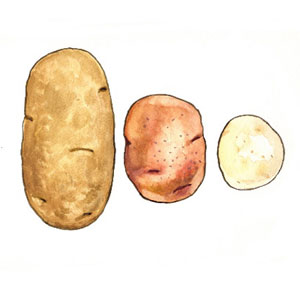
For those who are trying to subscribe to a healthy lifestyle, many have thrown away potatoes as starchy, empty calories and look at it with the same distaste as white flour. However, I think that eaten in moderate portions potatoes have been given a lousy reputation unfairly, and that they can be easily put into a healthy diet. Although it is true that potatoes contain a lot of carbohydrates,  they also contain a lot of vitamins, fiber (1 medium baked potato has more fiber than a serving of brown rice), and until you process them to an unrecognizable point, they are quite healthy and satiating (especially if you have an active lifestyle). A few things you want to keep in mind though is that when you peel a potato, the nutritional value goes down, so eat the skin! If I am eating white potatoes I like to go for the red or fingerling ones not only because I think they taste better, but they are smaller and thus have a higher skin to starch ratio (in my mind at least?).

 That all being said though, there is no doubt that sweet potatoes have a higher nutritional value than white potatoes. They are lower in calories, but also have more vitamins such as vitamins c and a, minerals such as potassium and magnesium, and anti inflammatory compounds. Similarly, yams are also very beneficial to ones health, but are not the same thing as a sweet potato at all. It seems that sweet potatoes still win out over yams when it comes to minerals, vitamins, and compounds.


Today I was thinking of what to make with the leftover duck we had, and I was inspired to make sweet potato latkes.
What you will need is:
  • 2 large sweet potatoes, grated
  • 1/2 of a red onion, chopped
  • 1 sprig of rosemary, chopped (optional, but great)
  • 1/4 lemon
  • 1/4 cup of flour (wheat or spelt or anything really I used white because it was all Dan had but but whatever the healthiest thing you have will work!)
  • 1 egg lightly beaten
  • 1 clove of garlic, minced
  • salt to taste
  • pepper to taste
Pre-heat your oven to 350(if you want to bake rather than fry)

First you grate the sweet potatoes in a large bowl and squeeze the lemon and sprinkle some salt onto them. Set them aside.

Then you take the chopped onions, garlic, rosemary, flour, and egg and combine them in a bowl together.

Pat the potatoes with a paper towel to get some of the moisture out and combine the onion mixture with the sweet potatoes until they are well mixed.

The next part is up to you, you can fry the latkes in butter or oil, or you can bake them on a lightly greased pan for about 30-40 minutes. I tried to fry them but they were coming out sort of greesy, so after trying two I decided to bake them. Either way, you can just scoop out the mixture with a regular spoon and make little silver-dollar pankate sized latkes.

After they were done I decided to serve them with a little creme fraiche I had (another source of beneficial fermented dairy!). They were great, I had to cut myself off!

Friday, January 7, 2011

Benefits of Lactofermentation with Kimchi and Corn Relish

I recently received in the mail my new copy of Nourishing Traditions by Sally Fallon and Mary Enig. And let me tell you, it is a pretty serious cookbook. In it they go though the benefits of a variety of traditional cooking methods. One of the chapters is all about fermented vegetables. Using Lactofermentation methods the food you are preserving creates a lot of beneficial bacteria for your gut health. Similar to yogurt, this bacteria keeps your intestinal health in balance. It combats yeast in your stomach (that can lead to cravings for sugar and flour), helps you to digest and utilize the nutrients in your food, and can even lead to better moods by helping your digestive system to create seratonin.

Preserving foods used to be part of many households before we could get fresh veggies all the time

Many traditional cultures eat fermented foods at almost every meal. However, it has not really carried over into American culture as much. Unfortunately fermentation of foods can be unpredictable and is really meant to be done at home in small quantities. This means that the traditional foods that used to be fermented like sauerkraut, relishes, pickles, and chutneys, are now mass produced without the beneficial fermentation. If you are sick of eating yogurt or taking probiotic supplements, making these foods traditionally is a great way to change it up and get some great benefits, not to mention that it produces very tasty foods.

One of the important agents that I used for the fermentation is whey that Dan brought me from work. If you don't have access to whey you could make your own (they show you how in nourishing traditions). Or you might be able to get it from a local creamery in your area. In most of the recipes, if you don't have whey you can compensate by using extra salt. However, it is better to use the real stuff because it controls bad bacteria and create lactic acid so that your vegetables will preserve well for months. If you use whey instead of relying on only salt you are more likely to have good results, and have them consistently. 

Here is the whey Dan was nice enough to get me from making cheese. Cheese making produces a lot of excess whey and it sometimes goes to waste. Whey is a great source of complete protein so if you can find ways to use it you will reap the benefits!
The first thing that I made was kimchi, which is a traditional cabbage based Korean condiment that is really really tasty. My kimchi didn't come out looking like any kimchi I had seen before (I think because I used chili flakes instead of a chili paste) but hopefully it will taste just as good!

For the recipe you combine (I tweaked the recipe in the book because I had limited space):
1/2 head of shredded and cored cabbage
1/2 bunch of chopped green onions
1/2 cup grated carrots
1/4 cup grated radish
1/2 tablespoon grated ginger
2 cloves garlic
1/4 teaspoon chili flakes
2 tablespoons whey
1/2 tablespoon sea salt

You combine all the ingredients in a large bowl and use a pounder or meat hammer to release liquid from the vegetables (I used a potato masher).


After it is sort of softened (but not mushy) you put it in a wide-mouth mason jar and pound it down so that some of the liquid comes above the cabbage mixture. Also, the mixture should not go to the top of the jar (it should be at least one inch below). I think this is because as the mixture ferments it will expand a little but I am not sure yet. So then you seal the jar and let it sit at room temperature for 3 days before transferring to the top shelf of your refrigerator (it should not be TOO cold)


 The next thing I made was corn relish:


You follow the exact same process as the Kimchi but you just don't pound the veggies as much since you don't want super mushy corn. Here are the ingredients (again, I tweaked it because of my space limitations):

1&1/2 cups corn
1 small tomato seeded and diced
1 small onion finely diced
1/4 diced and seeded red bell pepper
2 tablespoons chopped cilantro leaves
1/2 tablespoon sea salt
2 tablespoons whey


And then they can sit really pretty on your shelf for a few days! Enjoy!

Wednesday, January 5, 2011

"Healthy" Food Traps

It's a few days after New Years. And I have noticed a whole lot of new commercials that have cropped up on TV advertising foods and services for a better, thinner, you. Although I guess the sentiment is good, many of these things aren't really that great for sustaining a healthy lifestyle.

Uh-oh, you're busted


One of the things I am seeing a lot of commercials for is the new McDonald's Fruit and Maple Oatmeal.

This seams like a nice idea, but sugar, in addition to dried fruit, in addition to the carbs in the oatmeal, combine to make a meal that is a whopping 57 grams of carbs (32 of which are sugar!). This will probably make your blood sugar spike and unless you are about to go for a run or something, you really don't need that many carbs all at once. Also, this breakfast only has 5 grams of protein. In the morning you want to start your day with more protein so you will stay full longer and also stay focused mentally. On top of all this, the list of artificial ingredients include: sodium phosphate, datem, sodium stearoyl lactylate, sodium citrate, carrageenan, sulfur dioxide, food starch-modified, barley malt extract, caramel color, and calcium ascorbate. Not so great!

The second thing I noticed was a bunch of Nutrisystem commercials.
I love the little leaf suggesting this food is natural.....
Nutrisystem is one of the programs, heavily advertised, that sends you all of your meals and snacks for a while so that you lose weight. Their philosophy is about using the glycemic index (blood sugar levels) to keep you balanced and full feeling on less calories. In theory, it's not a bad idea. However, there are a few real flaws with it. Number one, people who are super overweight often don't know how to cook healthy. Part of what caused the obesity epidemic in America was the fact that we don't HAVE to cook anymore. This program does not address this issue. Number two, The food in this program is low fat, high carb, and full of preservatives. Although you may lose the weight, I think it would be difficult to keep it off if you don't learn how to eat healthy on your own. Although the site claims to have a "transition program" that weens you into cooking, I doubt they work. I may sound judgmental, but I really get freaked out with the idea of having all of your meals delivered to you, frozen. This really just zaps the joy out of food and cooking.....


The last one that I see a lot is for Yogurt products like Activia and YoPlus.
Gross.....
 These products make claims that they regulate the digestive system because they have healthy probiotics that support gut health. This is true, because ALL real yogurt has these healthy bacteria. However, this yogurt does not appear to have any advantage over any other yogurt with live and active cultures. In fact, they are at a disadvantage because they are full of sugar, which feeds yeast in your intestinal tract and will actually kill off healthy bacteria in your system, totally defeating the purpose of eating yogurt in the first place. In addition, they have preservatives and artificial flavors, including sucralose in the "light" versions of the yogurts. Also these yogurts are low fat, and so you are not getting the benefits of natural dairy fat. You are much better off getting a plain yogurt without any additives and with more natural fat, and adding your own flavors with fruit.

Speaking of adding things to yogurt, I think that it would be good to mention that I think it's a lot better to add fresh fruit to things like yogurt and steel cut oats, or even as snacks by themselves, then adding dried fruit. Most people wouldn't sit down and eat 15 apricots, or 75 grapes, but when the fruit is dried it makes it much easier to eat large quantities of it. Although fruit is good for you, it does have a lot of sugar so it is important to be mindful that you don't get carried away with dried fruit.